
At PEER, we strive to understand and leverage fundamental sciences that ultimately will lead us to create improved energy and environmental technologies. Our scientific researches focus on the areas of materials science, applied chemistry and computational techniques.
Materials Science
Polymer Science
Polymer materials, especially water-soluble ones, are central to many of PEER’s endeavors in the energy and environment sectors. Guided by the evolving fundamental knowledge in polymer chemistry and polymer physics, we strive to master their scalable syntheses and manufacturing, understand their structure-property relationships, and enhance their performances under the harsh real-world conditions. Specific properties of interest include their rheological behaviors, tolerance to high temperature, resistance to salinity, adsorption and stability under shear deformation.
Interfacial Phenomena
Fundamental knowledge of interfacial science is critical to understanding a variety of technologically important phenomena, including interactions at the interfaces of gas-liquid (e.g., foams, bubbles), liquid-liquid (e.g., emulsification and demulsification, microemulsion, extraction), gas-solid (e.g., aerosols, gas storage, catalysis), liquid-solid (e.g., corrosion inhibition, viscosification, membranes), and solid-solid (e.g., lubrication, nanomaterials). Many industrial applications hinge on such interactions at the microscopic level, and at PEER we seek to understand and exploit these behaviors by means of both experimentation and theoretical modeling.
Catalysis
Catalytic reactions are crucial in the pursuit of a sustainable future. As of 2005, catalytic processes generated about $900 billion in products worldwide. At PEER, both homogeneous the heterogenous catalysis are important research topics with focus on transforming basic raw materials to value-added chemicals through innovative designs of catalysts and reactors. Our competitive advantage is that we gather experimental and theoretical experts with diverse backgrounds in chemical engineering, theoretical chemistry, surface chemistry and material science.
Enhanced Oil Recovery
Enhanced oil recovery seeks to mobilize and extract oil that remains in reservoirs after conventional production. Its effectiveness depends on the interplay among fluid properties, interfacial interactions, and transport through porous media. At PEER, we integrate expertise in polymer science, interfacial phenomena, and molecular modeling to develop materials and processes that improve oil displacement and reservoir sweep efficiency. Our approach combines polymer flooding for mobility control, surfactant flooding for interfacial tension reduction, and conformance control to limit preferential flow through highly permeable zones and redirect injected fluids toward poorly swept regions. Particular interests include formulation stability, wettability alteration, and fluid–rock interactions under high-temperature and high-salinity conditions. Through complementary experimentation and theoretical modeling, we seek to connect molecular-scale mechanisms with macroscopic recovery performance, guiding the design of efficient and economically viable technologies while reducing chemical consumption and environmental impact.
Applied Chemistry
Microbial Biochemistry
Microbial biochemistry studies the chemical processes within and relating to living microorganisms. Molecular genetics, protein science and metabolism and the three cornerstones of microbial biochemistry. At PEER, our understanding of microbial biochemistry enables us to manipulate the microorganisms and their metabolisms that convert basic feedstocks to value-added chemicals with high selectivity and yield. Our emphasis is on the versatility of microbial metabolisms and the intrinsic ability of microorganisms to mediate biogeochemical cycles.
Isotope Geochemistry
Isotope geochemistry involves the determination of the relative and absolute concentrations of the elements and their isotopes in the Earth and on Earth’s surface. The chemical composition of the Earth is determined by two opposing processes: differentiation and mixing, and a major source of differentiation is fractionation, an unequal distribution of elements and isotopes. Therefore, kinetics of Isotope Fractionation (KIF) is an extremely important topic, based on which one can determine the origin, maturity, migration and accumulation natural gases, which further lead to efficient resource extraction. At PEER, our research is focused on the KIF of both carbon and hydrogen. In particular, we seek to understand the entropy and enthalpy changes of cracking reactions for isotope-labeled and unlabeled hydrocarbons.
Computational Techniques
Molecular Modeling
Traditionally, the discovery of new materials relies greatly on trial-and-error. Even though this approach has been used for decades, its ‘blind’ nature makes new development very costly and time-consuming. The rapid development of modern computational facilities and new algorithms has opened another dimension for molecule design and optimization. For two decades, PEER has been working to establish novel approaches for the development of new materials (catalysts, surfactants, functional polymers) by using a series of advanced simulation tools (coarse-grained modeling, molecular mechanics methods, density functional theory, etc.) that are spatially and temporally diverse, with each component representing a tradeoff between microscopic precision and macroscopic depiction.
Data Science
At PEER, we take advantage of latest development of modern data science, especially various machine learning techniques, to bridge the gap between atomic/molecular simulation and macroscopic behaviors of the materials. This allows us to benefit from the well-developed, highly-precise molecular modeling techniques while circumventing their disadvantages in time consumption and computational cost. Such new computational paradigms are being validated through various experimental techniques and will eventually be applied to several technologically important scenarios in the energy and environment sectors, such as the prediction of surfactant performances, screening of suitable catalyst, and design of polymers with targeted properties.
 Kevin Blankenburg brings more than 30 years of experience in oilfield technology, operations, business development, and technology commercialization. His expertise includes strategic program management, technology development and commercialization, field applications, and coordination of multidisciplinary technical and business teams. He has extensive experience working with oil and gas operators and service companies to translate technologies into practical field solutions. He currently serves as Director of Strategic Programs at PEER Institute, leading oilfield technology development and commercialization programs and coordinating laboratory, field, technical, and business activities.
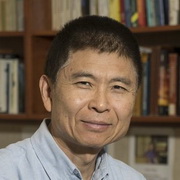 Prof. Wang is the Dick and Barbara Dickinson Professor of Chemical Engineering and the Executive Officer for Chemical Engineering at Caltech. Prof. Wang’s research group uses statistical mechanics to study a host of problems in the interdisciplinary areas of physical chemistry, material science and biophysics. A central goal of his work is to understand and predict properties based on the molecular characteristics of matter and systems, and to obtain simple insight to seemingly complex problems. His current activities revolve around three main themes: charged systems, including polyelectrolytes, salt-doped polymers, and electric double layers; nucleation or more generally barrier crossing in polymers and soft matter; and nonlinear rheology of polymer gels and entangled polymers.
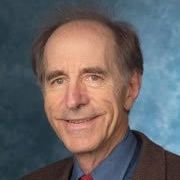 Prof. Gavalas is the Professor Emeritus of Chemical Engineering at Caltech. His research interests include inorganic membranes, Separations, clean fuel technology; and catalysis. Being a world-famous scientist in chemical engineering, Prof. Gavalas has made many important advances in the application of advanced mathematical tools to chemically reacting systems throughout his career.
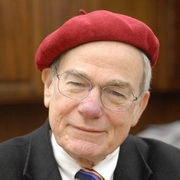 Prof. Goddard is the Charles and Mary Ferkel Professor of Chemistry and Applied Physics and Director of Materials and Process Simulation Center (MSC) at the California Institute of Technology. He has made many contributions to theoretical chemistry, such as the generalized valence bond (GVB) method for ab initio electronic structure calculations and the ReaxFF force field for classical molecular dynamics simulations. Prof. Goddard is a member of the International Academy of Quantum Molecular Science and the U.S. National Academy of Sciences.
 Ms. Sun is the chief financial officer at PEER. She is in charge of the finance, human resources and general management at PEER. Ms. Sun is also a Chartered Financial Analyst.
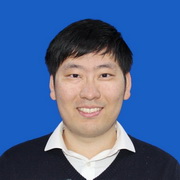 Dr. Zhu is the director of PEER Suzhou Center. He is interested in developing and exploiting new catalytic methane conversion routes. His work spans the range from nonoxidative methane to ethylene conversion, photochemical methane activation, all the way to the application of solid oxide fuel cells. His past research focused on diamond photocatalysis, using emitted solvated electrons to reduce nitrogen and carbon dioxide, and heterogeneous catalysis including low temperature cellulose conversion
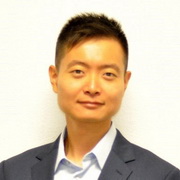 Dr. Jiang is the director of PEER Hong Kong Center. He obtained his Ph.D. degree in materials chemistry from the University of Chicago. At PEER, he is leading the efforts to develop a variety of polymer- and surfactant-based chemicals used in resource extraction and water treatment. Prior to joining PEER, Dr. Jiang’s research focus were on solution-processed thin film photovoltaics, colloidal synthesis and surface functionalization of nanomaterials, plasmonics of heavily-doped semiconductors and solid-state chemistry at nanoscale.
 Dr. Haroun is the director of PEER Abu Dhabi Center. Being a technology professional with over 18 years of experience, he has hybrid and integrated research background in petroleum engineering and environmental engineering together with focus on energy policy that bridges aspects needed to reach comprehensive sustainable solutions. Dr. Haroun has over 80 publications, including conference proceedings, journals, book and 4 patents in emerging/hybrid EOR, oilfield scale control, environmental remediation from Abu Dhabi offshore muds, petroleum economics, risk and uncertainty in volumetric assessments of conventional and unconventional reservoirs and environomic water management technologies.
 Dr. Wu is the senior manager of environmental technology at PEER and is leading the research in sensors. These sensors are based on light-matter elastic (Mie scattering, Optical Coherence Tomography/OCT) and inelastic (absorption, RAMAN, Laser Induced Fluorescence/LIF) interactions, and on gas adsorption/desorption processes. Major projects include multiwavelength laser scattering and LIDAR, QCL MIR isotope analyzer, tunable lasers (UV-Vis-IR) and drift-free carbon polymer sensors. Sensors and techniques developed are applied to petroleum drilling and refinery, biological science and engineering. Prior to joining PEER, Dr. Wu got his Ph.D. degree in chemistry from Caltech.
 Dr. Blanco is the senior manager of energy technology at PEER. He obtained his Ph.D. degree from UCLA. Prior to joining PEER, he served as the director of the Process Simulation and Design Collaboration at Caltech for more than 20 years after a 10-year stint in the chemical industry. He has also served as a senior research staff of the PEER Institute to work on a number of collaborative R&D projects funded by DOE. His expertise areas are in the new theoretical method development in molecular mechanics, molecular dynamics, statistical mechanics, and their applications to molecular interaction in condensed media. His research background includes chemistry, molecular biology, physics, nanotechnology, with strong emphasis in sensor design, spectroscopy and materials surface science.
 Dr. Shuler is the associate director of PEER Institute. After obtaining his Ph.D. degree in chemical engineering from University of Colorado, he had worked for Chevron for 21 years, directing multiple field implementation of chemical flooding projects before he joined PEER in 1999. Dr. Shuler’s main research interests include Enhanced Oil Recovery and scale and gas hydrate control. He is an esteemed petroleum engineer and has broad experience in the area of laboratory, field, and computer modeling studies of fluid treating issues for oil and gas operations worldwide.
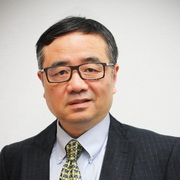 Dr. Tang is the co-founder and director of PEER Institute. Dr. Tang is a world-renowned geochemist who uses the fundamental principles of chemistry to explain subterranean geochemical processes during the hydrocarbon formation, evolution and production stages, and to design and apply cost-effective oilfield chemicals for improve hydrocarbon recovery in the environmentally responsible manner. He has pioneered in applying molecular modeling and designing techniques to many fields of organic geochemistry, surface chemistry, reaction kinetics, and petroleum chemistry. Dr. Tang has served as the corporation consultant for a number of global energy production companies.